How to Immerse in the Best of Puerto Rico: 5 Unmissables of Puerto Rico Island
There's few places on Earth that offer the home-like, welcoming feelings of Puerto Rico, even if you've never stepped foot on the island before.
For me, it was as if the air was different. Palpable. Thick with culture, history, and an overlapping aura between humans and Mother Nature alike.
One of the most impressive elements of this tiny island is the giant, untethered heart at its center. While officially a United States territory but also self-governed country, Puerto Rico's defiance to carve (and uphold) its rich blend of Spanish, African, and Taino heritage while oozing depths of Latin and Caribbean culture is something spectacular.
El Yunque: The Enchanting Natural Rainforest
Firstly, Puerto Rico houses the only tropical rainforest in the entire U.S. National Forest system: El Yunque.
This ecological wonder is more than 28,000 acres of highly biodiverse ecosystem, high waterfalls, mountainous terrain, multiple habitats, lush greenery and foliage, along with endemic, biodiverse wildlife and birds.
Some of the biodiversity highlights boast over 240 species of tree, no less than 50 orchid varieties, pristine rivers with several species of fish, shrimp, and freshwater crab species, 150+ types of wild fern, and 127+ types of vertebrae species. Phew!
More magically, the forest holds 23 species of tree that are found nowhere else on Earth, along with hundreds of endemic species to include the rare (and unfortunately, critically endangered) Puerto Rican green parrot, plus the Puerto Rican boa snake, Puerto Rican Emerald hummingbird, and Puerto Rican woodpecker.
Walking underneath the canopies of trees invites a hum of cackles, buzzes, birdsong, and chatter. Coarse leaves and creeping vines often cover the terrain top to bottom from the forest bed, the trunks of the trees, and the messy, dangling branches like nature's own privacy curtains.
While it's possible to see beautiful, sprawling views of Puerto Rico island before you—the rainforest sits at a central, northeastern point, with natural elevation—it's also possible to head higher, for panoramic views.
A strenuous hike is available to the El Toro Wilderness, around an altitude of 1070m (3524ft) above sea level, and prompts a more challenging route for hikers to enjoy incredible eastern views of the island and across the Atlantic.
Either way, make sure that travelling up the Road 186-corridor (or the more commonly known El Toro Scenic Byway), to explore the depths and marvel that is El Yunque remains an absolute must on your route.
The Coquí: 2 to 5 Centimetres of Two-tone Nightly Soundscape
Following on from the native rainforest wildlife, if you've never heard of (or simply heard) the Coquí, you're in for a treat.
This tiny, teensy, minuscule little tree frog can produce its call up to 100 decibels—which, when you're surrounded by what feels like a thousand of the same two singing notes, gets surprisingly deafening!
Named after its exact call that starts at a lower tone (co-) followed quickly by a much higher one (-quee!), there are a staggering 20 different types of coquís found all over the island, with 13 of them in El Yunque.
A mere two inches at a maximum and often in the colours of light brown, blunt yellow, or light green, its scientific name has the meaning of "free toes", as it strangely does not need webbed feet.
Utilising instead their toe pads and useful when climbing trees, clinging to leaves, or ascending other vertical objects, they are also unique with their lifecycle—requiring no water like traditional amphibians to lay eggs, Coquís skip the tadpole phase entirely as the eggs hatch quickly into fully-formed frogs.
Coquís have established themselves as a beloved Puerto Rican icon, its sound recognisable anywhere from small, urban towns and bustling cities to remote areas of the rainforest jungle.
Yauco: The Artsy, Quaint, Colourful In-land Town
If there's one place to visit that injects the soul of Puerto Rico into one confined space, it's the tiny town of Yauco in the mountainous region of southern Puerto Rico.
Easily accessible on the fastest highway route between the city of Ponce, another touristic hotspot on the southern coast, and the famous lines of Western beaches to include Rincón and Mayagüez, Yauco earned its reputation by forging a hardy art culture, brightly-coloured houses and senses of rich individuality, and is often recognised as Puerto Rico's authentic, fresh coffee capital.
Coffee cultivation in the Yauco region is known to date back to the 18th Century, driven by its favourable, mountainous environment and altitude, regular rainfall, and healthily fertile soils that easily assist the coffee trees.
A few organic coffee farms are still in production today, insisting on some of the finest, aromatic tastes in all the world.
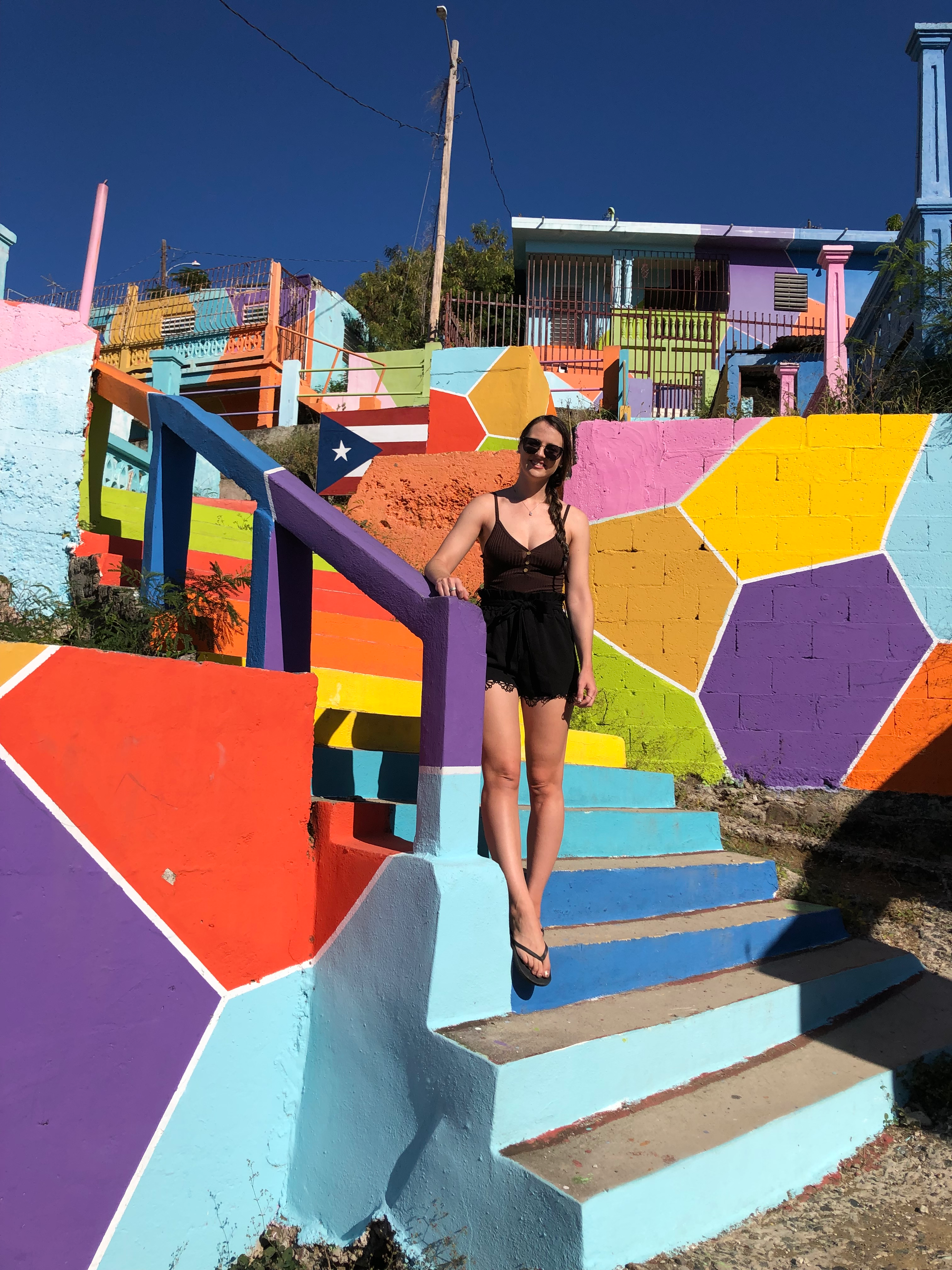
The most striking area to discover is the Yaucromatic art district, promising a bounty of colours with the entire town serving as an open, public art project since 2017.
From jungle greens to pillar-box reds, fiery oranges, stark purples, highlighter yellows and aqua blues, the streets are heavily covered with paintings, murals, quotes, and expression—some even including the telephone poles, sidewalks, and other regular, mundane cityscape.
Serving as a giant open-air art gallery and urban hub of expression, making sure your itinerary includes a stroll within a painting is a worthy stop on anyone's list of Puerto Rico.
Bioluminescent Bays: Viques, Fajardo, and La Parguara
If you want to experience something that's like peering into, or floating in, a galaxy that's mere inches away, you need to experience bioluminescence at least once in your life.
One of the most famous natural attractions and incredible phenomenons, bioluminescence involves microscopic plankton that glows neon blue at night due to high concentrations of light-emitting organisms called dinoflagellates. When stirred and with motion, these microscopic organisms create a chemical reaction that emits light, and the effect of a sparkling, mesmerising sea of stars.
Only occurring in specific, mangrove-lined bays, the stimulation of the plankton causes a sudden drop in their natural pH level with a rapid influx of protons into the cell. This instantly triggers the enzyme into its internal chemical reaction.
Interestingly, the mangrove forests are the catalyst to creating the perfect, nutrient-rich environment, releasing specific, organic materials and bacteria into nearby waters that specifically feed the dinoflagellates.
The memorable option is to head to the pristine and beautiful sister island of Viques, with its famous Mosquito Bay deemed the brightest in the world by Guinness World Records.
Back on mainland Puerto Rico, Fajardo offers Laguna Grande bay, located on the east of the island in the most touristic and popular hub. While the much more secluded, natural, and quiet option lies with Viques, both of these bays are restricted for human interference.
Only in the southwestern corner of mainland Puerto Rico can you swim or kayak in the waters, and literally immerse yourself in the experience—also a better option for smaller budgets, without needing to pay to head to another island first.
La Parguara experiences, located west of Ponce on the south coast of Puerto Rico, are often two-hour tours at nightfall which require heading out on a small boat, heading to a nearby bay, and being able to kayak and swim in the waters to feel the experience up close—like 'snow angels' with a surrounding, luminously glittering silhouette. Think all-consuming, infinite reflections of the deep night sky above.
For any tour, choosing a moonless night and as dark a sky as possible is the most important and works wonders for bringing the phenomenon to life before your eyes. Harsh moonlight can take away from the sheer, piercing electric-blue that spreads throughout the blackness of the water, and you want that as clear as possible.
Puerto Rico has some of the highest concentrations of bioluminescent planktons, seeing up to 160,000 to 700,000 individuals per liter of water.
Old San Juan: Puerto Rico's Capital and 'Old City'
No trip to Puerto Rico would be complete without wandering both the historical and dazzling streets of the capital Old San Juan—a vibrant, 500-year old walled city and UNESCO World Heritage Site.
Where winding cobbled streets lined with historic colonial buildings meet sharp infusions of Caribbean, Spanish, and Latin American cultures, Old San Juan has a distinct melting pot of eclectic, unique identity that is both abundant and vivacious in its air.
A transportation back in time awaits with centuries-old architecture to include historic fortresses, colonial mansions, religious landmarks and cultured plazas—some of the oldest dating back to the 15th Century.
Must-sees are visits to the 16th Century icons Castillo San Felipe del Morro (El Morro) and the largest Spanish fortification in the Americas, Castillo San Cristóbal on the northwestern tip (and with sprawling ocean views)—both part of the National Park Service and free entry with an America The Beautiful pass.
Other landmarks are the striking Cathedral de San Juan Bautista, San Juan’s venerated cathedral and Puerto Rico’s grandest religious building. The second oldest church in the Western Hemisphere and founded in 1521, it is also the oldest church on U.S. soil.
Also built in the 15th Century follows the sky-blue, colourful World Heritage site of La Fortaleza, serving from the mid-16th Century to present day as the resident governor's mansion.
Dotted among the welcoming and home-like plazas, you can find refreshing cafes and restaurants offering typical Puerto Rican cuisine, mostly characterized by 'criollo' flavours that feature staple ingredients like mofongo (fried plantains), lechón (roasted pork), and pasteles (a similar mixture of both, green banana blended with masa root vegetable together with stewed pork, and wrapped in banana leaves and boiled!).
Music and dance also make their waves throughout daily and annual life and often echo through the streets, with some busy festivals and celebrations occupying weeks throughout the calendar and family events lasting several days—visions of warm, energetic crowds chattering with laughter, togetherness, and unity.
In short, Puerto Rico offers rural, remote, busy, and beautiful: just about all different tastes of architecture, history, culture, tradition, food, nature, wildlife, music, and delightfully colourful energy.